Why Where You Lie in the Room Changes Your Sound Bath
Quick Answer: Sound in a room is physical — intensity falls off with distance, bass pools near walls, and a gong three feet from your head is a different instrument than the same gong across the room. The spot you claim decides whether the hour is enveloping or startling: first timers do best in the middle of the room, feet toward the instruments, never head first beside the gong. The other half of the experience is staged comfort — padding under you, support under the knees, a blanket on top because body temperature drops fast when you lie still for an hour. The people who float out of these sessions engineered it in the first five minutes.
The practitioner plays the room. You choose where in the room you are.
How does position change what you actually hear?
Because you are lying inside the instrument, and rooms have geography.
Sound intensity drops steeply with distance, so the difference between six feet and twenty feet from a large gong is not subtle — up close, a full gong swell is a physical event that can spike your heart rate rather than settle it. Crystal bowls throw bright overtones that can turn piercing at close range, especially for sensitive ears. The front row seems like the premium seat because concerts taught us that; in a sound bath it is the intense seat, and intensity is not the goal.
The middle of the room is where the sounds blend. Practitioners tune their playing to the room as a whole, and the blended wash — where bowl tones layer into gong shimmer without any single source dominating — happens at moderate distance. That wash is the thing people describe when they rave about these sessions.
Orientation matters nearly as much as distance. Feet toward the instruments reads as gentler for most people: the sound arrives up the body rather than crashing directly into the head, and the skull is pointed away from the loudest transients. Head toward the instruments is the connoisseur setting — more detail, more intensity — worth trying at session three, not session one.
Walls and corners are bass traps, where low frequencies pool and boom unevenly, and hard floors under thin mats transmit more vibration than carpeted ones — pleasant for some, buzzy for others.
None of this has a single right answer. The point is that it is adjustable, and almost nobody adjusts it.
What setup lets you actually relax for a full hour?
Padding below, warmth above, weight on the eyes, and support under the knees — the four things veterans bring and first timers wish they had.
Solve the floor first. An hour motionless on a thin mat over hardwood defeats more sound baths than any spiritual obstacle. Double up mats if the studio allows, or bring a folded blanket for under your whole spine. If your studio offers bolsters, take one — under the knees — it unloads the lower back and eliminates the mid session ache that otherwise arrives at minute thirty.
Bring a blanket to go over you, not just under. Core temperature drops noticeably when you lie still for forty five minutes, and the room that felt warm walking in feels cold at minute thirty five. Being cold is the number one reported distraction in these sessions, and it is entirely preventable.
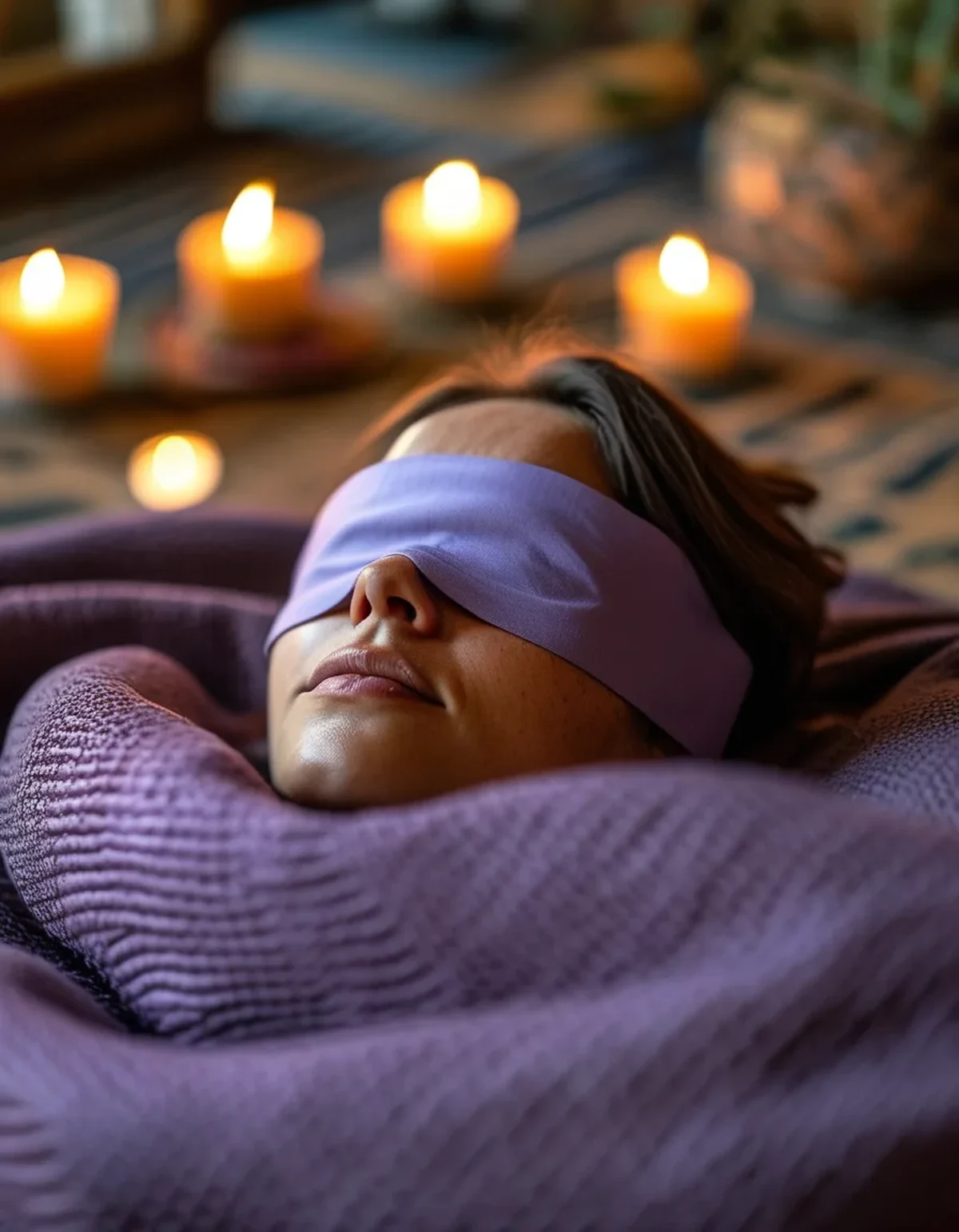
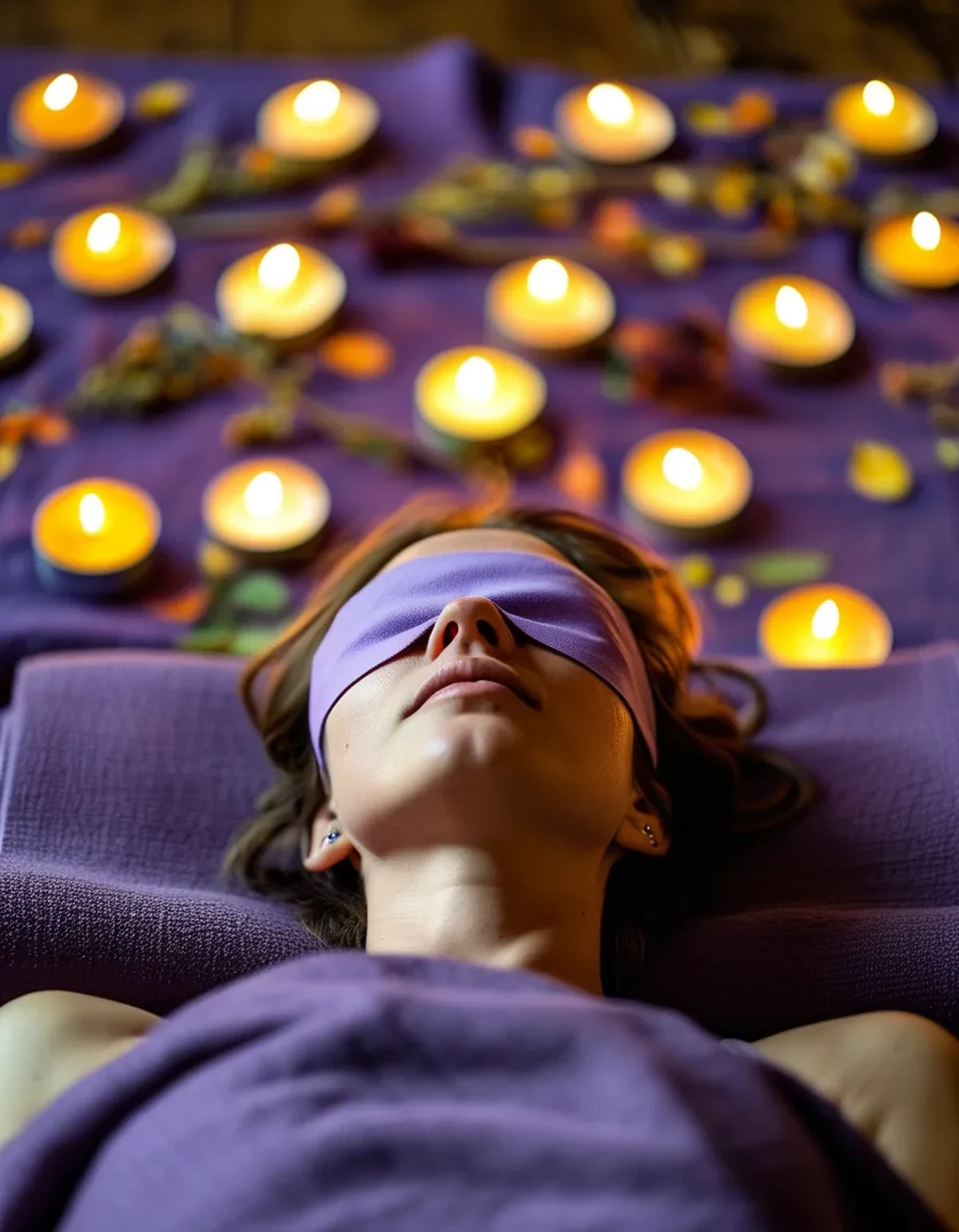
Cover your eyes. An eye pillow or folded scarf removes the ceiling, the exit sign, and the flicker of candles, and the light weight itself is settling. Studios dim the lights; darkness you control is better.
Dress like a nap, not an errand. Nothing that digs when you are horizontal — soft waistbands, warm socks, layers. This is the natural habitat of buttery-soft leggings and the oversized sweatshirt, and the one venue where overdressing for comfort is impossible. Jeans at a sound bath is an hour long mistake.
Arrive ten minutes early. The early arrivals claim the middle of the room and build their nests unhurried; the late arrivals get the spot beside the gong and a thin mat. In a practice made of stillness, the whole experience is decided before the first bowl is struck.
7 Things That Quietly Ruin a Sound Bath
1. Arriving caffeinated. A 4pm cold brew guarantees an hour of composing emails to a soundtrack. Taper caffeine from noon on session days and the difference is embarrassing.
2. Coming in on a full dinner. Digestion is loud from the inside when you are lying still. Eat light a couple of hours before; a sound bath on a heavy meal is mostly a stomach recital.
3. The phone on vibrate. In a silent room, a vibrating phone in a cubby is audible to everyone and mortifying to one. Airplane mode, fully off, or the car.
4. Hard waistbands and zips. Whatever presses when you are horizontal for an hour will announce itself at minute twenty and never stop. See the dress-like-a-nap rule.
5. Getting cold at minute thirty. The classic. The blanket you almost did not bring is the difference between drifting and enduring.
6. Fighting the itch and the swallow. You are allowed to move. Scratch, swallow, shift, roll your ankles — a small adjustment costs three seconds; resisting it costs ten minutes of attention.
7. Auditing the experience while it happens. Checking whether you are relaxed yet is the one activity guaranteed to prevent it. Some sessions are transcendent, some are just a pleasant lie down with interesting sounds — the second kind is also the practice working. Expectations are the heaviest thing you can bring into the room.
Does the season change the sound bath equation?
More than you would expect for an indoor practice, and fall is when the calendar and the practice line up.
September is restock season for studios — schedules refill after summer, new session times appear, and intro offers surface as studios court the back to routine crowd. If you have been meaning to try one, the next six weeks have the most options and the best-value entries of the year. Evening sessions also change character as the light shifts: a 7pm sound bath in August ends in daylight, and by October it ends in full dark, which most regulars consider the upgrade — walking out into a quiet, dark evening extends the state instead of snapping it.
The awkward thermostat weeks are coming. As studios switch from air conditioning to heating, room temperatures swing session to session, and the on-top blanket goes from nice to essential. Layers you can shed beat one heavy piece, and warm socks earn their place from now through spring.
Colds and sniffles season affects a silent room too — a sound bath with a dripping nose is misery for you and percussion for the neighbors. Reschedule; studios are used to it.
And the standing practical notes, since sound baths draw first timers all fall: pregnant attendees, people with sound sensitivities, and anyone with a pacemaker or similar device should mention it to the practitioner beforehand — good facilitators adjust positioning and instrument choices readily, and being three more feet from the gong solves most of it. Hearing protection is completely legitimate if loud swells are the one part you dread; softened is better than skipped.
The practice survives every season. The setup just needs re tuning as the room does.
FAQ: Sound Bath Setup Questions, Answered
Where exactly should a first timer set up?
Middle of the room, feet toward the instruments, off the walls. It is the most balanced acoustic seat and the gentlest introduction. Save the near-gong and head-first placements for after you know how your system responds.
What if I fall asleep?
Then you fell asleep somewhere extremely pleasant — it happens constantly, practitioners consider it a compliment, and light snoring is absorbed by the sound. If you sleep through every session, try a bit more distance from the instruments and a slightly earlier session time.
Can I just do this at home with recordings?
Recordings are a real practice and a good maintenance habit, but small speakers cannot reproduce the physical, felt-in-the-chest component of live instruments moving air in a room — which is most of what the positioning in this article is about. Use recordings between sessions, not instead of the first one.
Why did the same session feel amazing one week and flat the next?
Because you were different — sleep, caffeine, stress, and where you set up all shift the experience, and the practitioner varies the program too. Flat sessions are still rest. Judging the practice on any single hour is like judging sleep on one night.
TL;DR:
- Sound falls off with distance and pools near walls, so the middle of the room, feet toward the instruments, is the balanced first timer seat — never head first beside the gong.
- Stage comfort like it matters: padding under the spine, a bolster under the knees, a blanket on top, eyes covered, soft clothes throughout.
- Skip late caffeine and heavy dinners, kill the phone entirely, and let yourself move when you itch.
- Fall schedules and intro offers make the next few weeks the easiest entry point, and the after-dark walk home is the season’s quiet upgrade.
Book one for a low caffeine day this month, arrive ten minutes early, and claim the middle of the room like a regular. The hour takes care of the rest.
Keep Reading
This article is for general informational purposes only and is not medical advice. Always consult a qualified health professional for guidance specific to you.