7 Reasons a Home Sound Bath Does Not Land Like the Studio One
Quick Answer: Most of what a studio sound bath does comes from things a recording cannot reproduce: physical low-frequency vibration you feel rather than hear, a room with long natural reverberation, and the commitment of having gone somewhere. At home you can recover a surprising amount of it with better low-end reproduction, a longer settling period, and removing the ability to leave.
The live session left you genuinely altered for hours.
You bought a recording by the same practitioner, lay on your living room floor, and after twenty minutes you were mostly thinking about the washing.
Seven things are different, and only two of them are about the audio.
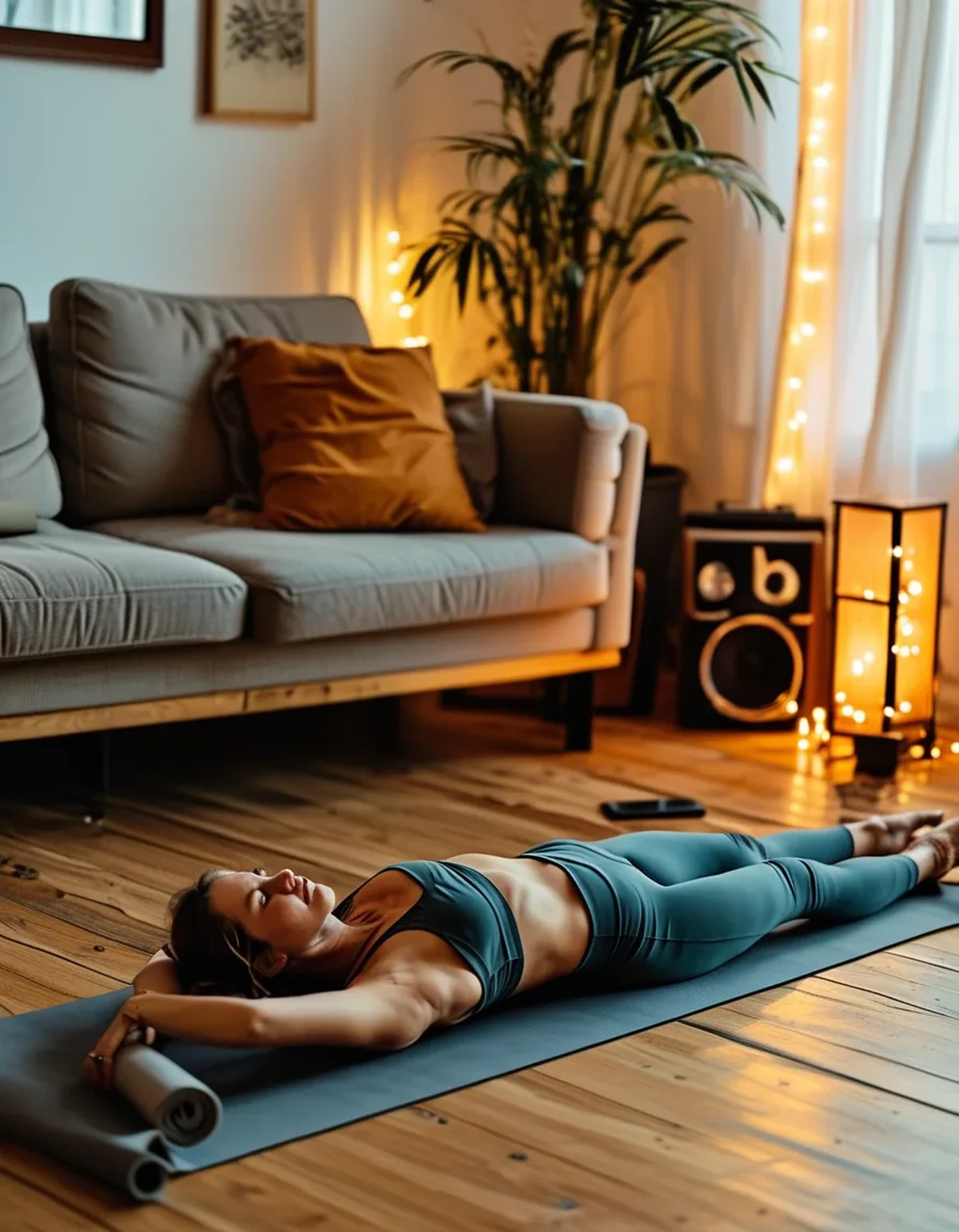
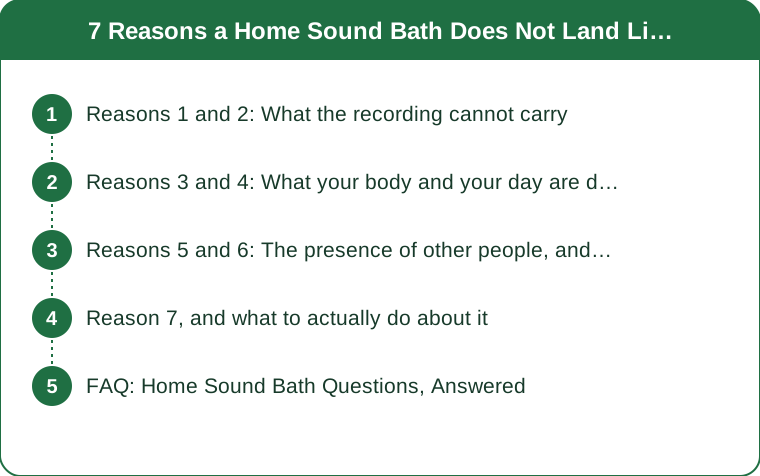
Reasons 1 and 2: What the recording cannot carry
1. You are missing the part you feel rather than hear
A large gong or a big singing bowl produces substantial energy well below 100Hz, and some of it below the range of comfortable hearing altogether. In a room, that energy arrives at your body as physical pressure - you feel it in your chest and through the floor - and that bodily sensation is a large part of why a live session is so distinctive.
A phone speaker reproduces essentially none of it. Laptop speakers reproduce almost none. Standard earbuds roll off exactly where the interesting content is.
So the recording is not a quieter version of the live session. It is the same event with its most physically affecting component removed, which is why it can sound correct and feel like nothing.
What helps: over-ear headphones with genuine low-end extension, or a speaker with a real driver rather than a small one. Lying on a wooden floor rather than carpet also helps meaningfully, since the floor transmits what low end you do have into your body.
2. The room is doing none of the work
Studio and hall spaces used for sound baths usually have long reverberation times, often chosen deliberately. A struck bowl continues for many seconds, reflections arrive from all directions, and the sound surrounds you rather than arriving from a point.
A living room with a sofa, a rug, and curtains is acoustically dead by comparison. The same recording in that room sounds close, small, and directional - it comes out of a box in the corner rather than filling the space.
What helps: headphones, which sidestep the room entirely and are the single biggest improvement available. If you prefer speakers, position them apart and away from walls, and use a harder-surfaced room - a hallway or a bathroom is acoustically closer to a studio than a soft living room is.
Reasons 3 and 4: What your body and your day are doing
3. You have not transitioned into it
Going to a studio involves a journey, an arrival, taking your shoes off, lying down among other people, and waiting for a few minutes while nothing happens. By the time the first bowl sounds, twenty or thirty minutes of gradual disengagement have already taken place.
At home you go from a screen to the floor in about ninety seconds. Your nervous system is still in the state it was in five minutes ago, and the first ten minutes of the recording are spent doing the settling that the journey did for you.
What helps: build a deliberate transition of five to ten minutes. Not sitting on your phone - something physical. Dim the lights, change into different clothes, lie down for five minutes before pressing play. The practice starts before the sound does.
4. You can stop, and you know it
In a studio you are committed. Leaving would be conspicuous, so the option is functionally removed, and removing the option is a significant part of why the experience works. Nothing to decide means attention is not spent on deciding.
At home the option to stop is present continuously. Every moment of discomfort or boredom is an invitation to reassess, and reassessing is the outward-facing mental mode that the whole thing is trying to release.
What helps: make stopping slightly costly. Phone in another room, playing to a speaker. Tell someone you are unavailable for the next forty minutes. Choose a recording long enough that you are not going to sit through the end of it out of stubbornness alone.
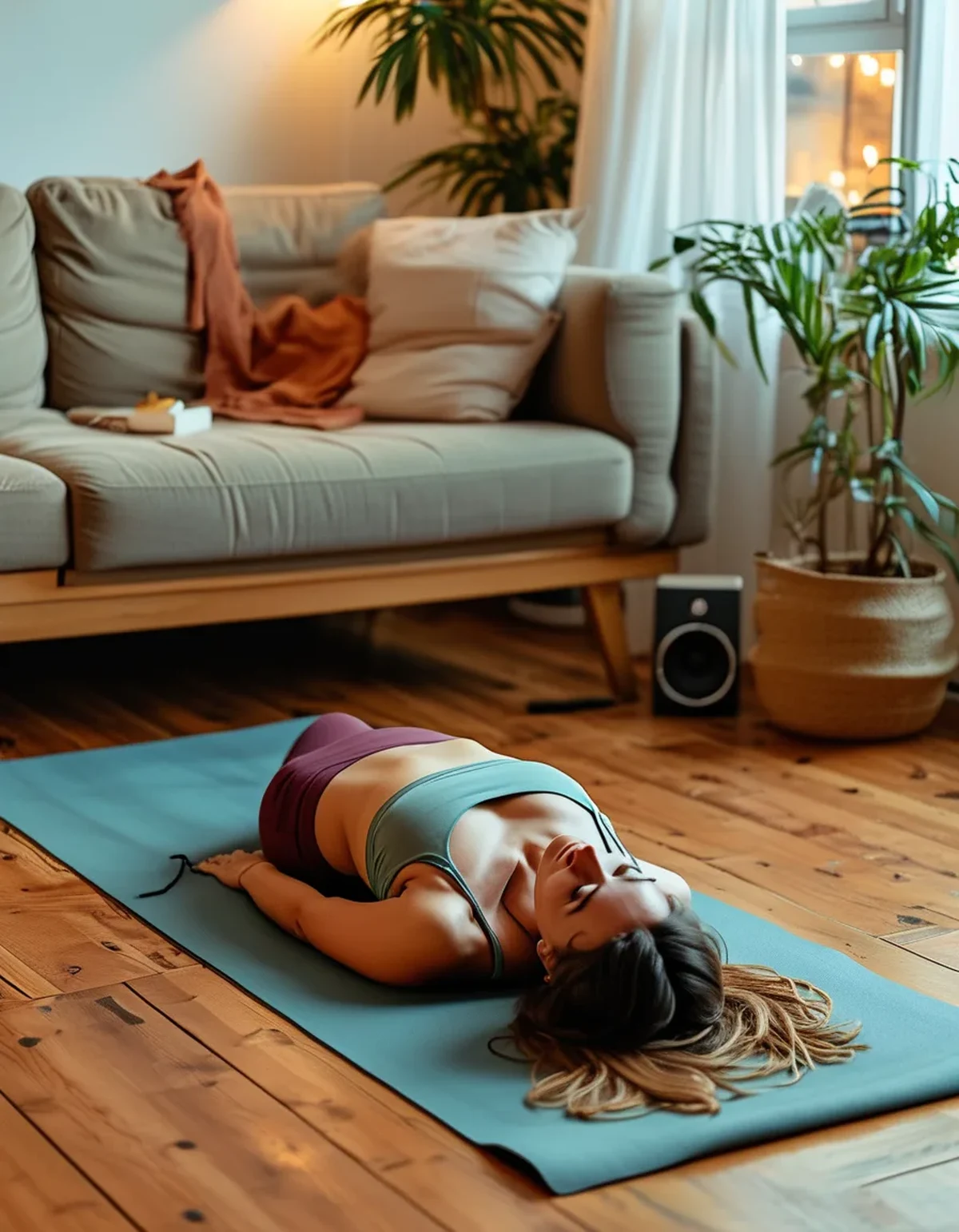
Reasons 5 and 6: The presence of other people, and of a person
5. Group settling is real and you cannot fake it
A room of twenty people going still together produces something individually lying on a floor does not. Breathing synchronises to some degree in groups, and the ambient signal of everyone else being settled is a strong cue that it is safe to settle.
There is also a plain accountability effect. Nobody in a room of twenty people gets up after eleven minutes to check the oven.
What helps: if the group aspect turns out to matter for you, that is a reason to keep going to live sessions rather than to fix your home setup. Alternatively, practise at the same time as someone else, even in a different house - it is a weaker version of the same thing and it does work for some people.
6. The practitioner is responding to the room
This is the most underrated difference. A live practitioner is watching the room and adjusting - waiting longer before the next strike because people are still settling, softening because someone is tense, extending a section because the room has dropped into it.
A recording cannot do any of that. It follows a fixed arc that was right for the room it was recorded for, on that day.
What helps: use recordings that are longer and more spacious than feels necessary, since a slow recording accommodates a slow listener while a brisk one does not. And try several practitioners rather than concluding recordings do not work for you - the fit between a fixed arc and your own pacing varies enormously.
Reason 7, and what to actually do about it
7. You are expecting the studio experience, and measuring against it
This is the one that does the most damage. Having had a powerful live session, you now lie down with a specific outcome in mind, and you monitor for it. Monitoring is an alert, evaluative state, and it reliably prevents the thing being monitored for.
It is the same reason trying to fall asleep does not work. The wanting is the obstacle.
What helps: treat home practice as a different thing that happens to use similar sound, rather than as a cheaper substitute for the live version. Home sessions are typically quieter, subtler, and more cumulative - the benefit shows up over weeks of regular short sessions rather than in one dramatic evening. Judged on their own terms they work well. Judged against a live session they will always disappoint.
A home setup worth actually doing:
Over-ear headphones with real bass extension. A hard floor with a thin mat rather than a thick one, so vibration reaches you. Five to ten minutes of lying still before the sound starts. Phone in another room, playing to the headphones or a speaker. A recording of at least thirty minutes, unfamiliar rather than one you know well. Same time of day, three or four times a week.
That setup will not reproduce a live sound bath. It will produce something genuinely useful that a live session cannot, which is regularity - and over a month, regularity tends to matter more than intensity.
FAQ: Home Sound Bath Questions, Answered
Are headphones or speakers better?
Headphones, for most home setups, by a clear margin. They remove your room’s acoustics from the equation and deliver the low frequencies that small speakers cannot. Speakers only win if you have a genuinely capable system in a fairly live-sounding room.
Does it matter which frequency or tuning the recording uses?
Far less than the claims made about specific tunings suggest. What reliably matters is low-frequency content, duration, spaciousness, and reproduction quality. Choose on how it sounds to you rather than on a stated frequency.
How long should a home session be?
Thirty to forty-five minutes if you can, because settling takes longer at home than in a studio. Twenty minutes done four times a week beats sixty minutes done once, and consistency is where home practice actually beats live sessions.
TL;DR:
- The physical low-frequency vibration is the part that does not survive a recording, and small speakers reproduce none of it.
- Your living room is acoustically dead compared with a studio - headphones sidestep the problem entirely.
- You skipped the journey, and the journey was doing twenty minutes of settling for you.
- Being able to stop, and measuring the session against a remembered live one, both keep you in the wrong mental mode.
- Home practice wins on regularity rather than intensity - judge it over a month, not an evening.
The recording is not a failed copy of the live session. It is a different practice with a different strength, and the setup that suits it looks nothing like a studio.
Keep Reading
This article is for general informational purposes only and is not medical advice. Always consult a qualified health professional for guidance specific to you.