Why Sound Baths Work Better Lying Down Than Sitting Up
Quick Answer: Lying down (rather than sitting upright) during a sound bath lets your nervous system shift more fully into a parasympathetic, rest-and-digest state, since your body isn’t using postural muscles to stay upright — this is why most sound bath facilitators specifically recommend the lying-down position over seated meditation posture.
You’ve noticed sound baths feel deeper and more restorative than seated meditation, and the position you’re in is a bigger part of that than most people realize — this isn’t just comfort preference, it’s a physiological difference.

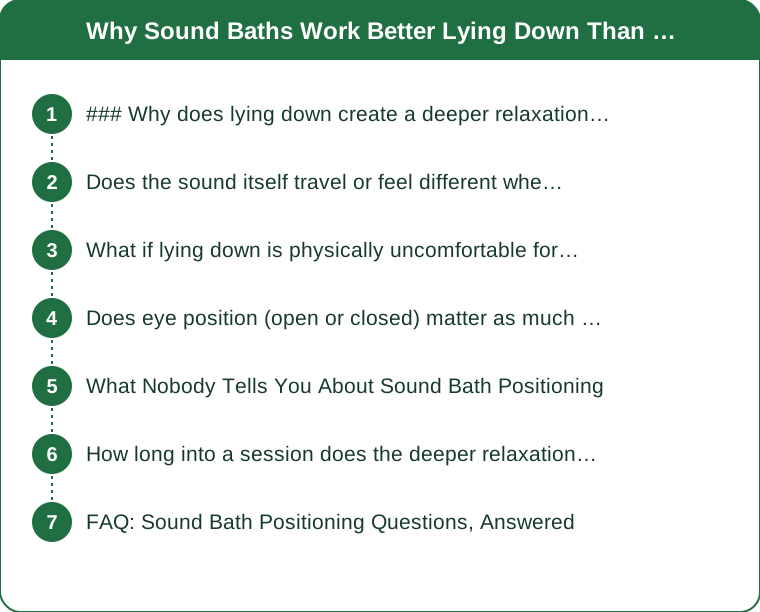
### Why does lying down create a deeper relaxation response than sitting upright?
Sitting upright, even in a relaxed meditation posture, requires ongoing low-level activation of postural muscles to maintain spinal alignment against gravity, which keeps a small amount of the sympathetic nervous system engaged. Lying down removes this postural demand almost entirely, allowing a more complete shift into the parasympathetic, rest-and-digest state that sound baths are designed to encourage.
This is part of why traditional yoga practice ends in savasana (lying flat) rather than a seated position — the same principle applies directly to sound bath practice. This section leads with the core physiological answer, matching this blog’s distributed Q&A format.
Does the sound itself travel or feel different when you’re lying down?
Yes — lying flat on the floor or a mat allows vibrations from instruments like gongs and singing bowls to transmit more directly through the floor and into your body, rather than being partially absorbed by a chair or cushion under a seated position. Many people report feeling the sound as much as hearing it while lying down, an effect that’s much subtler when seated.
What if lying down is physically uncomfortable for you?
A semi-reclined position with support under the knees and head (using a bolster or folded blanket) offers much of the same nervous-system benefit as fully lying flat, while reducing strain for people with lower back sensitivity. The key element is minimizing active postural effort, not the exact flatness of the position — a well-supported recline achieves this nearly as effectively as lying completely flat.

Does eye position (open or closed) matter as much as body position?
Closing your eyes removes visual processing demand, which frees up additional attention for the auditory and vibrational experience, compounding the relaxation effect that lying down already provides. Combining a lying position with closed eyes is generally considered the most effective combination for sinking into a sound bath’s intended state.
What Nobody Tells You About Sound Bath Positioning
Most people assume the specific instruments or the length of a session matter most for how deep a sound bath experience feels, but body position is a much bigger lever than most participants realize. Two people experiencing an identical sound bath — one lying down, one sitting upright — often report meaningfully different depths of relaxation, purely from this postural difference.
This is why some studios have shifted entirely toward mat-based, lying-down setups rather than the cushion-and-chair seated arrangements more common in general meditation classes.
How long into a session does the deeper relaxation state typically kick in?
Most people begin noticing a genuine shift into deeper relaxation 10-15 minutes into a lying-down sound bath, though this varies based on how activated or stressed someone is going in. A full 45-60 minute session gives enough time for this shift to fully develop and be sustained, rather than just beginning.
FAQ: Sound Bath Positioning Questions, Answered
Is it normal to fall asleep during a sound bath while lying down?
Yes, very common — falling asleep or drifting into a hypnagogic (between-sleep) state is a frequent and generally welcomed response to the deep relaxation lying down encourages.
Should you use a pillow under your head during a sound bath?
A thin pillow or folded blanket for head support is fine and often recommended, since neck strain from a flat, unsupported head position can distract from settling into relaxation.
Does body position affect the emotional release some people experience during sound baths?
Some practitioners believe the deeper physiological relaxation from lying down can also allow deeper emotional processing to surface, though individual experiences vary considerably and this isn’t a universal or guaranteed effect.
TL;DR:
- Lying down removes postural muscle activation, allowing a deeper parasympathetic shift
- Vibrations transmit more directly through the floor into your body while lying flat
- A supported semi-recline works nearly as well if lying fully flat isn’t comfortable
- Closing your eyes compounds the relaxation effect that a lying position already creates
If a sound bath has felt merely pleasant rather than genuinely restorative, the mat under you might matter more than the instruments in front of you.
Keep Reading
This article is for general informational purposes only and is not medical advice. Always consult a qualified health professional for guidance specific to you.