Why a Gong's Sound Lands in the Body Completely Differently Than a Singing Bowl's Does
A gong struck during a sound bath can feel like it physically shakes the chest and rattles straight through the body, while a singing bowl played right afterward can feel comparatively gentle and steady, even at a similar volume, and that difference isn’t about intensity at all — it comes down to the fundamentally different way each instrument actually produces its sound.

Why a Gong Produces a Broad, Chaotic Frequency Spread
The physics: a-struck-gong-generates-a-broad-chaotic-spread-of-overlapping-inharmonic-frequencies-all-at-once-rather-than-a-single-clean-sustained-tone (a struck gong generating a genuinely broad and somewhat chaotic spread of overlapping, inharmonic frequencies essentially all at once, rather than settling into any single, clean, sustained tone the way many other instruments do, per the sound-bath-instruments-guide logic — a-struck-gong-generating-a-genuinely-broad-and-chaotic-spread-of-overlapping-inharmonic-frequencies-essentially-all-at-once-rather-than-settling-into-a-single-clean-sustained-tone), and the reframe (the gong’s texture being defined by frequency chaos, not just loudness)).

Why a Bowl’s Single Sustained Tone Lands More Steadily
The contrast: a-singing-bowl-produces-one-dominant-sustained-tone-that-decays-slowly-and-evenly-giving-the-body-a-single-stable-frequency-to-settle-into-rather-than-many-competing-ones (a singing bowl instead producing one clearly dominant, sustained tone that decays slowly and evenly over time, giving the body a single stable frequency to actually settle into, rather than the many competing, overlapping frequencies a gong sends out at once, per the sound-bath-benefits-guide logic — a-singing-bowl-instead-producing-one-clearly-dominant-sustained-tone-that-decays-slowly-and-evenly-over-time-giving-the-body-a-single-stable-frequency-to-settle-into-rather-than-many-competing-frequencies), and the frame (stability of tone, not softness, being what makes a bowl feel gentler)).
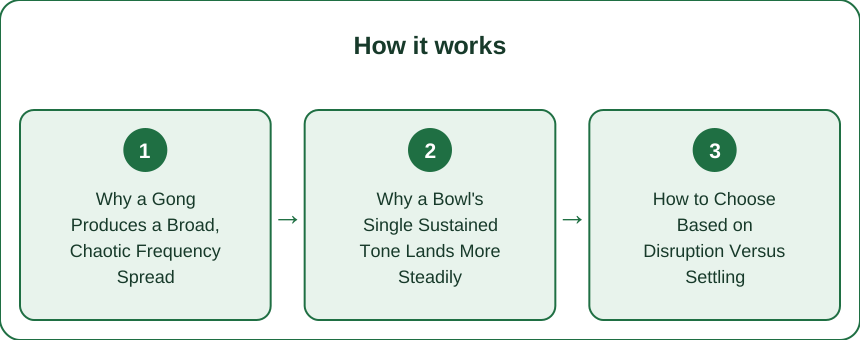
How to Choose Based on Disruption Versus Settling
The choice: use-a-gong-early-in-a-session-to-disrupt-mental-chatter-through-its-chaotic-frequency-spread-then-shift-to-bowls-later-to-let-the-body-settle-into-one-stable-tone (using a gong early in a session specifically to disrupt persistent mental chatter through its chaotic, overlapping frequency spread, then deliberately shifting to singing bowls later in that same session to let the body settle into one stable, sustained tone instead, per the home-sound-relaxation logic — using-a-gong-early-in-a-session-specifically-to-disrupt-persistent-mental-chatter-through-its-chaotic-frequency-spread-then-shifting-to-singing-bowls-later-to-let-the-body-settle-into-one-stable-sustained-tone), and the frame (sequencing instruments deliberately for the different jobs each is actually suited to)).
A struck gong generates a broad, chaotic spread of overlapping inharmonic frequencies all at once, while a singing bowl produces one dominant, sustained tone that decays slowly and evenly, giving the body a single stable frequency to settle into instead of many competing ones. Using a gong early in a session to disrupt mental chatter, then shifting to bowls later to let the body settle into that steadier tone, sequences the two instruments for the genuinely different jobs each one is suited to.
Keep Reading
This article is for general informational purposes only and is not medical advice. Always consult a qualified health professional for guidance specific to you.