Sound Bath vs a Meditation App: Which One Actually Calms You Down Faster?
Quick Answer: A live sound bath tends to produce a deeper, faster relaxation response due to physically felt vibration and the social commitment of being in a room with others, while a meditation app wins on consistency and accessibility for daily use. Use an app for daily maintenance and a sound bath periodically for a deeper reset.
Both get filed under ‘relaxation practices,’ but a room full of resonating singing bowls and a 10-minute guided app session aren’t interchangeable — they’re pulling different levers.

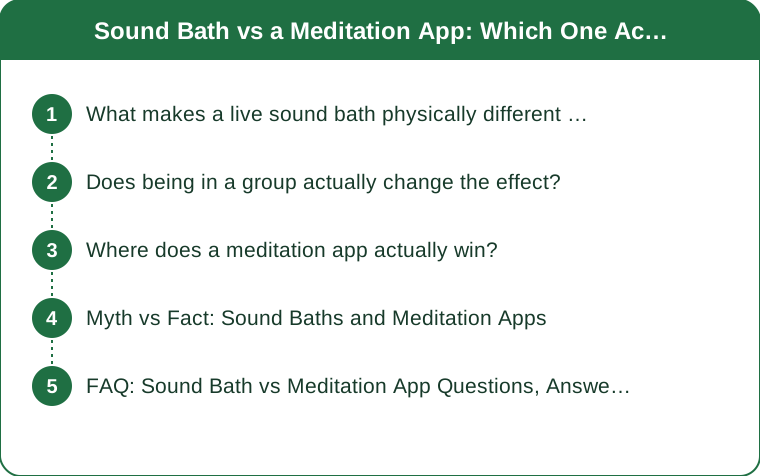
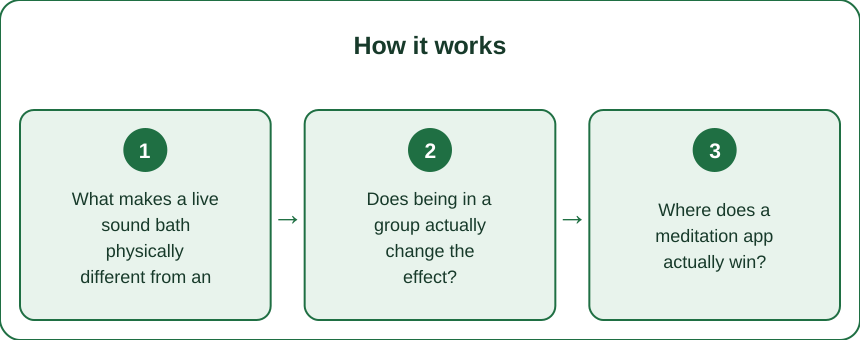
What makes a live sound bath physically different from an app?
In a live sound bath, low-frequency vibrations from instruments like gongs and singing bowls are physically felt through the floor and air, not just heard — this tactile component activates the parasympathetic nervous system through a pathway that audio alone, played through headphones or speakers, doesn’t fully replicate.
This is the main reason people often describe sound baths as feeling more ‘whole-body’ than a guided meditation, which is primarily an auditory and cognitive experience.
Does being in a group actually change the effect?
Yes, in a measurable way — being physically present with others in a low-stimulation, shared-intention setting taps into social co-regulation, where nervous systems partially sync with the calm state of the group. A solo app session, done alone at home, doesn’t have this social component at all.
This also cuts the other way: some people find a group setting adds a layer of self-consciousness that a private app session avoids entirely, so this isn’t a universal win — it depends on the person.

Where does a meditation app actually win?
Accessibility and consistency. A sound bath requires scheduling, travel, and usually a fee, which makes it naturally infrequent for most people. An app is available at 11pm on a random Tuesday for zero cost beyond the subscription, which matters enormously for building an actual daily habit rather than an occasional treat.
For the specific goal of consistent nervous system regulation over months, a daily 10-minute app session usually outperforms an occasional sound bath simply due to frequency — even though any single sound bath session may feel more powerful.
Myth vs Fact: Sound Baths and Meditation Apps
Myth: Sound baths are just meditation with music added. Fact: The physically felt vibration component is a distinct mechanism from guided meditation’s primarily cognitive and auditory approach — it’s not simply meditation with background sound.
Myth: A meditation app can fully replicate a sound bath if you use good headphones. Fact: Headphones deliver sound, not felt vibration through the body — the tactile component that defines a physical sound bath experience is largely lost regardless of audio quality.
Myth: More expensive or elaborate sound baths are always more effective. Fact: Instrument quality and venue acoustics matter less than most marketing suggests — session length, your own state going in, and whether you can physically relax into the space matter more.
FAQ: Sound Bath vs Meditation App Questions, Answered
Can I get some of the vibration benefit at home without live instruments?
A phone or speaker placed directly on your chest or against a wall during low-frequency audio gets partway there, though it’s a meaningfully smaller effect than an in-person session with real instruments.
How often should I attend a live sound bath for it to matter?
Even monthly sessions provide a noticeable periodic reset for many people — it doesn’t need to be frequent to be worthwhile, unlike daily practices which rely on consistency.
Is one objectively more effective for anxiety specifically?
Neither is definitively superior — some people respond more to the social, physical sound bath experience, others to the private, low-pressure format of an app. Trying both and noticing your own response is more useful than following a general ranking.
TL;DR:
- Sound baths add felt vibration and group co-regulation that apps can’t replicate
- Apps win decisively on accessibility, cost, and daily consistency
- Use an app for daily maintenance, a sound bath periodically for a deeper reset
- Neither is universally ‘better’ — response is genuinely individual
They’re complementary tools solving different parts of the same problem, not competitors for the same slot.
Keep Reading
This article is for general informational purposes only and is not medical advice. Always consult a qualified health professional for guidance specific to you.