Sound Bath Benefits Come From Frequency, Not Volume — Here's the Difference That Matters
Quick Answer: The relaxation response in sound baths is linked to specific low frequencies (often in the delta/theta brainwave-associated range, roughly under 8Hz equivalent resonance) entraining your nervous system — not to how loud the instruments are played. A quiet, well-tuned session outperforms a loud, poorly-tuned one.
People sometimes assume a more intense sound bath means deeper relaxation, but volume and depth aren’t the same axis at all — and pushing volume too high can trigger a stress response instead of a calming one.

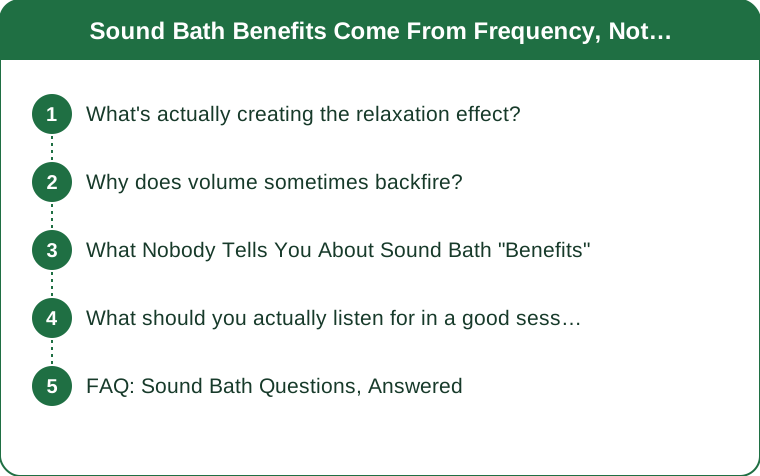
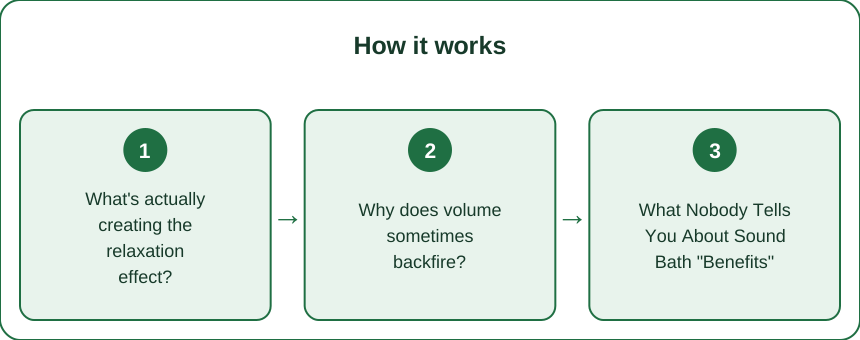
What’s actually creating the relaxation effect?
The proposed mechanism is frequency entrainment — your brainwaves gradually synchronizing toward the slower frequencies associated with rest states when exposed to sustained low-frequency tones from bowls, gongs, or chimes.
This is a physiological response to the frequency pattern, not the volume of the sound reaching your ears — a whisper-quiet gong at the right frequency can produce more measurable calm than a loud one played harshly.
Why does volume sometimes backfire?
Loud, sudden, or harsh sound triggers the acoustic startle reflex, a fast stress-response pathway that works against the slow entrainment effect the session is trying to build.
This is why practitioners emphasize gradual builds and sustained tones over sharp strikes — volume spikes reset your nervous system toward alert, not calm.

What Nobody Tells You About Sound Bath “Benefits”
Here’s the part that gets skipped: much of the reported benefit likely comes from the stillness and lying-down posture itself, not exclusively the sound. Any 45-minute period of enforced physical stillness with slow breathing produces some relaxation response.
Sound may enhance and extend that effect through frequency entrainment, but separating “the sound did this” from “lying still for 45 minutes did this” isn’t fully settled in current research.
What should you actually listen for in a good session?
Sustained, low, resonant tones that build gradually rather than sudden loud strikes; a consistent low hum or drone underneath higher chimes; and enough volume to feel present in your chest, not so much it’s startling.
If a session feels jarring rather than settling at any point, that’s a signal the instrument technique — not your ability to relax — is the issue.
FAQ: Sound Bath Questions, Answered
Do sound baths have solid scientific backing?
Early research on frequency entrainment and relaxation is promising but still developing — treat sound baths as a genuinely pleasant relaxation practice, not a clinically proven treatment.
Can sound baths help with sleep?
Many people report improved sleep the night of a session, likely from combined relaxation-response and routine effects rather than sound alone.
Is it normal to fall asleep during a sound bath?
Very common and generally seen as a sign the session is working, not something to fight or feel embarrassed about.
TL;DR:
- Relaxation comes from frequency entrainment, not volume — louder isn’t deeper
- Sudden loud sound can trigger a startle stress response instead of calm
- Some of the benefit likely comes from stillness itself, not sound alone
- Listen for gradual builds and low sustained tones, not sharp strikes
Next session, notice frequency and steadiness — not how loud the gong gets.
Keep Reading
This article is for general informational purposes only and is not medical advice. Always consult a qualified health professional for guidance specific to you.