Why the Frequency of a Sound Bath Matters More Than How Loud It Is
A louder sound bath can feel more immersive in the moment, but the depth of relaxation it produces has much more to do with the specific frequencies being played than with overall volume, which is why a quiet session with the right tones can outperform a loud one built around the wrong ones.

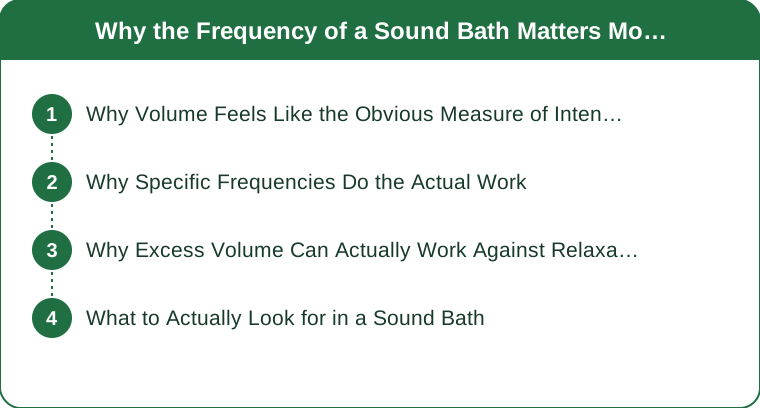
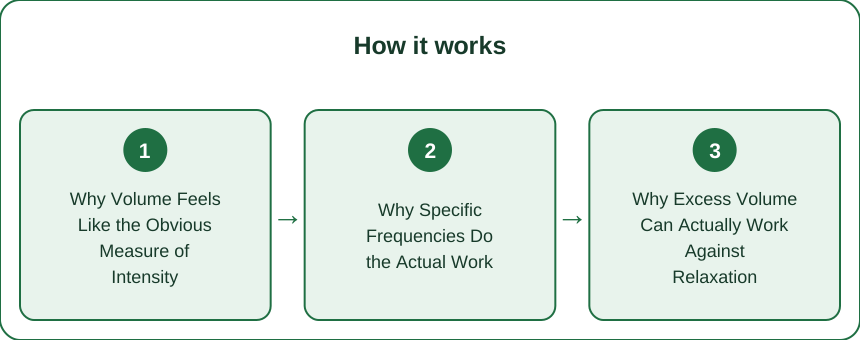
Why Volume Feels Like the Obvious Measure of Intensity
The assumption: a louder sound naturally feeling more powerful or immersive, which leads to an intuitive but mistaken idea that a more intense sound bath experience should also be a louder one.
Why Specific Frequencies Do the Actual Work
The mechanism: certain low frequencies, often in ranges associated with singing bowls and gongs, being linked in research to shifts toward slower, more relaxed brainwave states, an effect tied to the frequency itself rather than how loud it’s played.

Why Excess Volume Can Actually Work Against Relaxation
The downside: sound played at a high volume triggering a mild stress response in the nervous system, since loud, sudden, or sustained high-volume sound is processed by the body as a potential alert signal, working directly against the calming effect the session is meant to produce.
What to Actually Look for in a Sound Bath
The practical guidance: choosing a session or recording described as using low, resonant frequencies at a moderate, comfortable volume rather than assuming a louder or more dramatic-sounding session will be more effective, and the frame (specific low frequencies drive the relaxation effect, not volume — a moderate-volume session built around resonant tones is what actually relaxes the nervous system more than a loud one.)
A louder sound bath can feel more immersive in the moment, but certain low frequencies, often in ranges associated with singing bowls and gongs, are linked in research to shifts toward slower, more relaxed brainwave states, an effect tied to the frequency itself rather than how loud it’s played. Sound played at a high volume can actually trigger a mild stress response in the nervous system, since loud, sudden, or sustained high-volume sound is processed by the body as a potential alert signal, working directly against the calming effect the session is meant to produce. Choosing a session described as using low, resonant frequencies at a moderate, comfortable volume, rather than assuming a louder session will be more effective, is what actually relaxes the nervous system more.
Keep Reading
This article is for general informational purposes only and is not medical advice. Always consult a qualified health professional for guidance specific to you.