7 Things Nobody Tells You Before Your First Sound Bath
Quick Answer: A sound bath is a passive listening session using singing bowls, gongs, or chimes played over your relaxed or lying-down body — most first-timers are surprised by how physical (not just auditory) the vibrations feel, and how emotional the release afterward can be.
Most articles describe sound baths in vague, blissful terms. Here’s what a first-timer actually experiences, point by point.

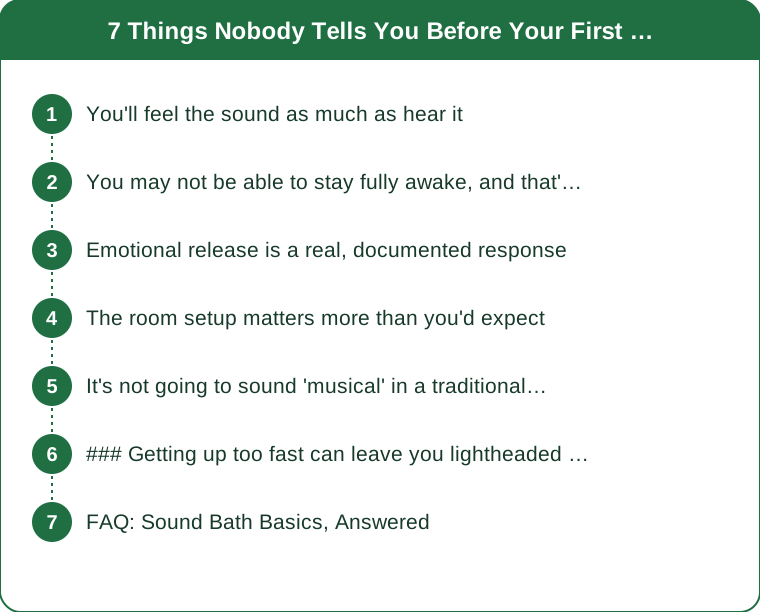
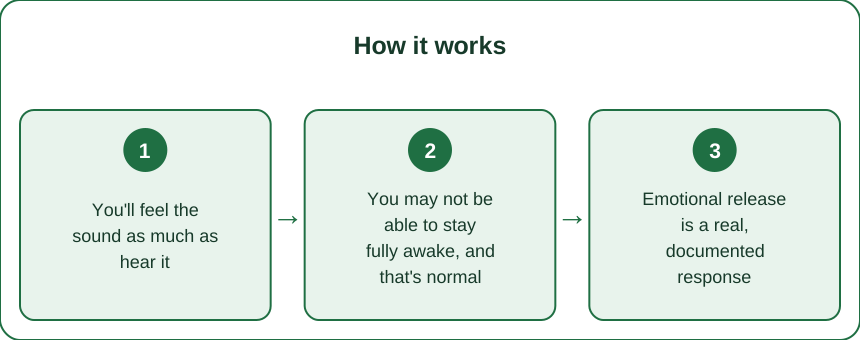
You’ll feel the sound as much as hear it
Singing bowls and gongs produce low-frequency vibrations that travel through the floor and your body, not just your ears — many first-timers describe a physical buzzing or pressure sensation, especially if lying directly on a mat rather than sitting in a chair.
You may not be able to stay fully awake, and that’s normal
Drifting in and out of a light sleep-like state (sometimes called a hypnagogic state) is extremely common and considered part of the experience by most practitioners, not a sign you’re ‘doing it wrong’ or missing the point.
Emotional release is a real, documented response
Some participants report unexpected tears, a lump in the throat, or a wave of emotion during or right after a session — this is a recognized response to deep relaxation and isn’t something to be alarmed by, though it can catch first-timers off guard.

The room setup matters more than you’d expect
Bring a layer (rooms are often kept cool for the equipment and to prevent drowsiness before it starts) and expect to lie on a yoga mat with maybe a blanket and eye mask provided — dress for comfort over style.
It’s not going to sound ‘musical’ in a traditional sense
Expect long, sustained, sometimes dissonant tones rather than melody or rhythm — the goal isn’t musical enjoyment in the usual sense, it’s the sustained resonance itself, which takes some recalibrating expectations for first-timers coming from a music background.
### Getting up too fast can leave you lightheaded — and no two sessions feel the same
Because your nervous system shifts into a deeply relaxed state, standing up quickly at the end can cause brief dizziness — practitioners typically build in a few minutes of slow reorientation before asking participants to sit up, so don’t rush this part.
One session rarely feels the same as the next
Instruments, practitioner, room, and your own state going in all vary session to session, so a flat or unremarkable first experience doesn’t necessarily predict how a second session with a different setup will feel.
FAQ: Sound Bath Basics, Answered
Do I need any experience with meditation to try a sound bath?
No — it’s a passive experience, you don’t need a meditation background, and many people’s first meditative experience of any kind happens to be a sound bath.
Is it normal to not feel anything the first time?
Yes — response varies a lot by person and session, and a flat first experience doesn’t mean the practice isn’t for you.
How long does a typical sound bath session last?
Most run 45-60 minutes, occasionally up to 90 for a deeper session — check with the specific studio, as length varies more than most other group wellness classes.
TL;DR:
- The vibrations are physical, not just auditory — you’ll feel them, especially lying down
- Drifting into sleep-like states and unexpected emotional release are both common and normal
- Dress warm, expect sustained dissonant tones rather than music
- Get up slowly at the end to avoid lightheadedness
Go in without expectations about how it should feel — the range of normal reactions is wider than most guides admit.
Keep Reading
This article is for general informational purposes only and is not medical advice. Always consult a qualified health professional for guidance specific to you.