7 Things Nobody Tells You Before Your First Sound Bath
Quick Answer: A sound bath is an hour of lying still while someone plays resonant instruments around the room. The things that most affect your experience are practical rather than mystical: how warm you are, where you lie relative to the instruments, whether you fall asleep, and how you feel afterwards. Getting those right makes the difference between a session you enjoy and an hour of being cold and self conscious.
The preparation is physical. The rest takes care of itself.
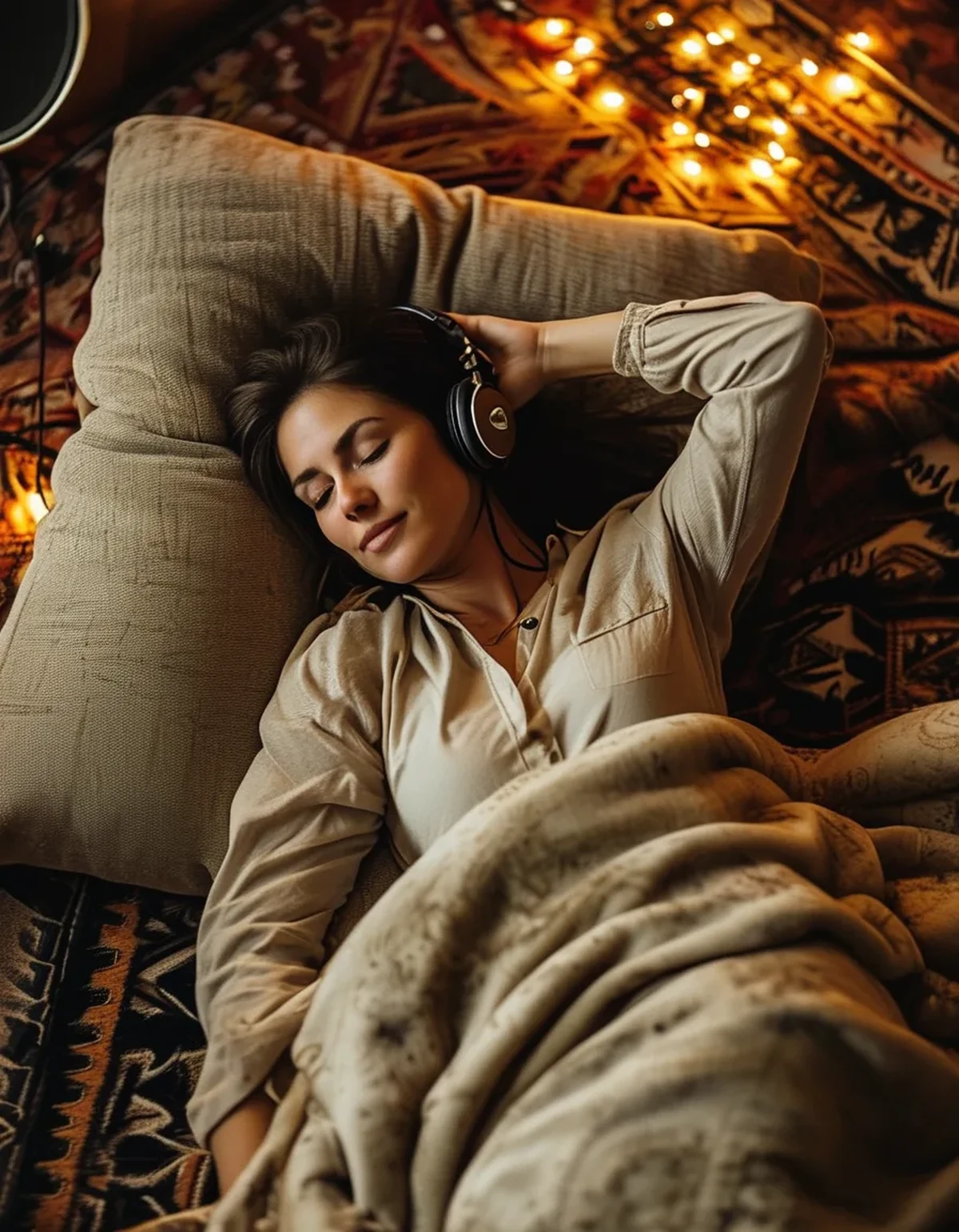
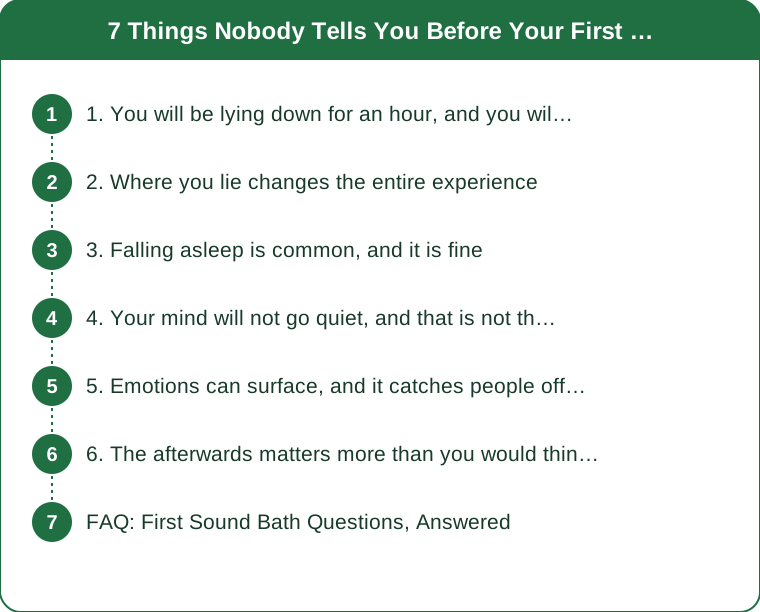
1. You will be lying down for an hour, and you will get cold
This is the single most common thing that ruins a first session, and it is entirely preventable.
Body temperature drops when you lie still, and it drops further as your nervous system settles and heart rate slows. An hour of near total stillness on a floor is quite different from an hour sitting, and floors are cold even in warm rooms.
What to bring, in order of importance:
A blanket, and a thicker one than you think. Most studios provide them and most studio blankets are thin. Being cold is completely incompatible with settling, because your body prioritises temperature over relaxation, and there is no technique that overrides it.
Socks and a layer you can put on rather than take off. Feet get cold first, and a jumper you can pull on before you start is easier than adjusting during.
Something under your head and knees. A cushion under the knees takes pressure off the lower back, which is the main reason people fidget. Most studios have bolsters; ask.
And get set up before it starts. Adjusting your position during the session is fine and it is easier not to need to.
2. Where you lie changes the entire experience
The room is not acoustically uniform, and position makes more difference than most first timers realise.
Close to the instruments means physical sensation. Gongs in particular produce low frequencies you feel in your chest and abdomen as much as you hear. Some people find this the best part of the whole thing. Others find it overwhelming, particularly with a large gong.
Further away gives a blended, more ambient experience. Less physical impact, more of a wash of sound, and generally easier for a first session.
Room corners and walls change the sound considerably. Standing waves make some spots noticeably louder at certain frequencies, and a corner can be surprisingly intense.
Practical guidance for a first time: choose the middle distance rather than the front row. You can always move closer next time, and there is no way to move away discreetly once it has started.
If you are sensitive to sound, or have any history of migraines triggered by sound, tell the practitioner beforehand. A good one will position you thoughtfully and may adjust what they play. This is a routine conversation and not an imposition.
3. Falling asleep is common, and it is fine
A large proportion of people fall asleep at some point in a first session, and it is one of the most frequently asked questions.
Lying still, warm, in a dim room, with continuous low frequency sound, is close to a perfect recipe for sleep, particularly for anyone who is tired to begin with. There is nothing to resist.
What matters practically:
You do not miss the benefit by sleeping. Rest is rest, and the session is not an information transfer that you can fail to receive.
You might snore, and nobody will care. It happens in most sessions and everyone there knows it.
Waking up disorientated is normal. Take your time getting up. Sitting up quickly after an hour of deep relaxation can leave you light headed, which is a genuinely common and unremarkable thing.
If you would rather stay awake, the practical answers are to be slightly less warm and to lie with your knees bent and feet flat, which is harder to fall asleep in than a fully supine position.

4. Your mind will not go quiet, and that is not the point
The expectation that a sound bath produces an empty mind sets people up to feel they have failed at lying down.
Thoughts continue. Planning, shopping lists, mild irritation about a work email, and self consciousness about whether you are doing it right. All of this is normal and none of it means the session is not working.
The useful reframe: the sound is something to return to, not something that switches thinking off. When you notice you have drifted into planning, you come back to the sound. Then it happens again. That cycle is the practice, not an interruption of it.
Self consciousness usually settles after ten minutes or so. The room is dim, everyone’s eyes are closed, and nobody is looking at anyone.
One practical note: if the silence between instruments feels uncomfortable, that is a common experience and it tends to ease across a session as the nervous system settles.
5. Emotions can surface, and it catches people off guard
It is reasonably common for people to feel unexpectedly emotional, and occasionally to cry, and almost nobody mentions this beforehand.
An hour of stillness with no distraction is unusual in modern life, and for many people it is the first genuinely unoccupied hour in weeks. Things that have been kept at arm’s length by activity have space to arrive.
What is worth knowing:
It passes, and it is not a sign anything is wrong. Practitioners see it regularly and will not react.
You can stop at any point. Sitting up, leaving quietly, or simply opening your eyes are all completely acceptable, and no explanation is required.
If you have experienced trauma, or are in a difficult period, it is worth mentioning to the practitioner beforehand, or choosing a smaller session where you feel more comfortable.
And the important boundary: a sound bath is a relaxation practice, not therapy or treatment. If difficult material surfaces regularly, working with a qualified therapist is the appropriate route, and the two are compatible rather than alternatives.
6. The afterwards matters more than you would think, and 7. autumn is the easiest time to start
6. Protect the half hour afterwards
The half hour after a session shapes how much of it you keep, and most people undo it immediately.
Get up slowly. Roll to one side, sit for a moment, then stand. Standing straight up after an hour of deep rest is how people end up dizzy, and it is easily avoided.
Drink some water and eat something if you are hungry. People often feel unexpectedly hungry or thirsty afterwards.
Do not schedule anything demanding immediately after. Driving straight into rush hour traffic or a difficult meeting removes most of the effect within twenty minutes. If you can, leave thirty minutes of nothing.
Expect to feel tired later. Some people feel notably sleepy for a few hours, and an evening session often produces the best sleep of the week.
Skip the phone for a while if you can. This is the single most effective thing on the list and the one nobody does. Ten minutes of scrolling in the car park undoes a surprising amount.
7. Autumn is the easiest time to start, with two caveats
The season genuinely suits this practice, and there are a couple of practical adjustments worth making now.
Darker evenings make evening sessions more appealing and more effective. A dim room in September at seven in the evening feels different from the same room in June when it is bright outside, and the natural darkness supports settling.
Studios are quieter in autumn than in January, when the new year rush fills every class. Better availability, smaller groups, and more attention from the practitioner.
The caveats:
Halls and studios get genuinely cold from now on. Heating often is not on yet in early autumn, and floors get cold before the air does. Bring more layers than the studio suggests, and consider a mat with actual thickness rather than a thin yoga mat.
Autumn is peak season for colds, and a room full of people lying still and breathing deeply is not the place to be with one. Most studios will let you rebook, and it is worth checking their policy before you book rather than after.
One practical point for the whole season: an evening session on a weeknight is worth more than a weekend one for most people, because it lands on a night when you actually need the sleep. It is also usually easier to book.
FAQ: First Sound Bath Questions, Answered
What should I wear?
Something comfortable that you can lie in for an hour, plus more layers than you expect to need. Socks and a jumper you can put on at the start, since you will get colder as you settle rather than warmer.
Is a sound bath a treatment for anything?
No. It is a relaxation practice, and it should be described that way. People frequently report feeling calmer and sleeping better, which is worth having on its own, and it is not a substitute for medical or psychological care.
Do I have to lie down?
No. Sitting in a chair is fine and most practitioners are happy to accommodate it. If lying flat is uncomfortable for your back, sitting or lying with knees bent both work.
Is it safe if I have a health condition?
Most people are fine, and there are a few situations worth mentioning to the practitioner in advance, including pregnancy, epilepsy, sound sensitivity, tinnitus, or having a pacemaker or metal implants. Ask your doctor if you are unsure, and tell the practitioner either way.
TL;DR:
- You will get colder than you expect lying still for an hour — bring a proper blanket, socks, and something under your knees.
- Position changes everything: mid distance for a first session, and tell the practitioner if you are sound sensitive.
- Falling asleep, a busy mind, and unexpected emotion are all completely normal and none of them mean it is not working.
- Protect the half hour afterwards, get up slowly, and stay off your phone — that is where most of the benefit gets lost.
- Autumn evenings suit this well, but halls are cold before the heating goes on, so overpack layers.
Book an evening session on a weeknight and bring a real blanket. Those two decisions cover most of it.
Keep Reading
This article is for general informational purposes only and is not medical advice. Always consult a qualified health professional for guidance specific to you.