7 Things to Know Before Your First Sound Bath Session
Quick Answer: A sound bath is a passive listening experience using instruments like singing bowls or gongs to support relaxation, and first-timers often underestimate how physically and emotionally involved lying still and listening for an extended period can actually feel.
It sounds simple on paper — lie down, listen to sound. What actually happens in the room is a little more layered than that.

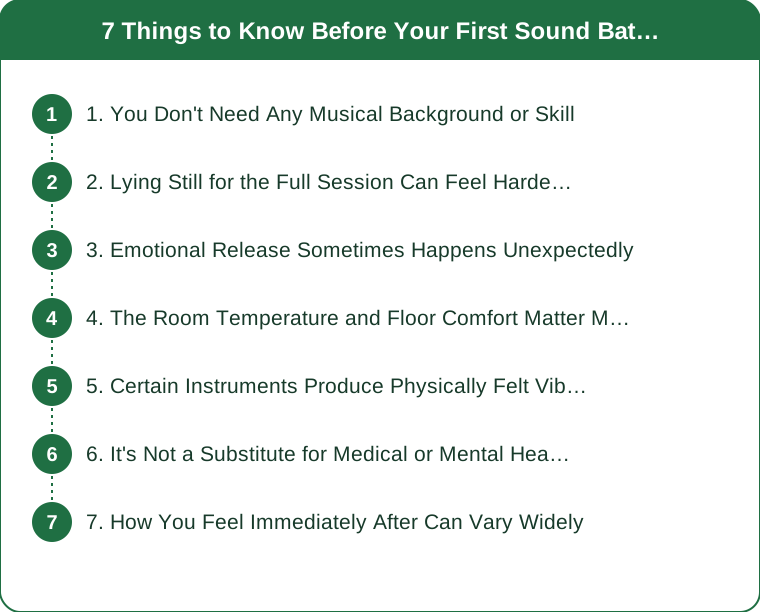
1. You Don’t Need Any Musical Background or Skill
A sound bath is entirely passive from the participant’s side — there’s no performance, singing along, or musical knowledge required. The experience is built entirely around receiving and relaxing into sound rather than participating actively, which makes it accessible regardless of any musical experience.
2. Lying Still for the Full Session Can Feel Harder Than Expected
First-timers sometimes underestimate how much mental effort it takes to stay physically still and mentally present for 45-60 minutes without a phone or usual distractions — a restless mind in the first 10-15 minutes is common and not a sign the practice isn’t working.
3. Emotional Release Sometimes Happens Unexpectedly
Some participants report unexpected emotional responses, including tears, during or after a session, which practitioners generally consider a normal part of deep relaxation allowing suppressed tension or emotion to surface rather than something to be concerned about.

4. The Room Temperature and Floor Comfort Matter More Than Expected
Since sessions involve lying still for an extended period, being too cold or uncomfortable on a hard floor becomes a bigger distraction than it would during a shorter or more active practice — bringing a light blanket and a supportive mat or cushion genuinely improves the experience.
5. Certain Instruments Produce Physically Felt Vibration, Not Just Sound
Larger instruments like gongs can produce vibration felt through the floor or body, not just heard, which surprises some first-timers — this is a normal, intended part of many sound bath formats rather than an unusual or overly intense experience.
6. It’s Not a Substitute for Medical or Mental Health Treatment
Sound baths are generally positioned as a relaxation and wellness practice, not a clinical treatment, so anyone with specific health conditions (including sensitivity to loud or low-frequency sound) should check with a practitioner or doctor beforehand rather than assuming universal suitability.
7. How You Feel Immediately After Can Vary Widely
Some people feel deeply relaxed and calm right after, others feel groggy or need a few minutes to reorient before driving or returning to regular activity — planning a slower transition out of the session, rather than rushing immediately into something demanding, tends to make the post-session experience smoother.
TL;DR:
- No musical skill or experience is needed to participate
- Staying still for the full session can be mentally harder than it sounds at first
- Unexpected emotional release during a session is normal, not a red flag
- Bringing a blanket and cushion meaningfully improves physical comfort
- Some instruments produce felt vibration, not just audible sound
Going in with realistic expectations about the physical and emotional side makes a first sound bath far less disorienting. This is general information, not medical advice.
Keep Reading
This article is for general informational purposes only and is not medical advice. Always consult a qualified health professional for guidance specific to you.