7 Sound Bath Instruments You'll Hear and What Each One Actually Does to Your Nervous System
Quick Answer: Crystal and metal singing bowls produce sustained, resonant tones that support relaxation; gongs create deep, textured waves that some people feel physically; chimes and tuning forks offer sharper, more precise tones used for targeted attention. Each instrument shapes the experience differently, not just the volume.
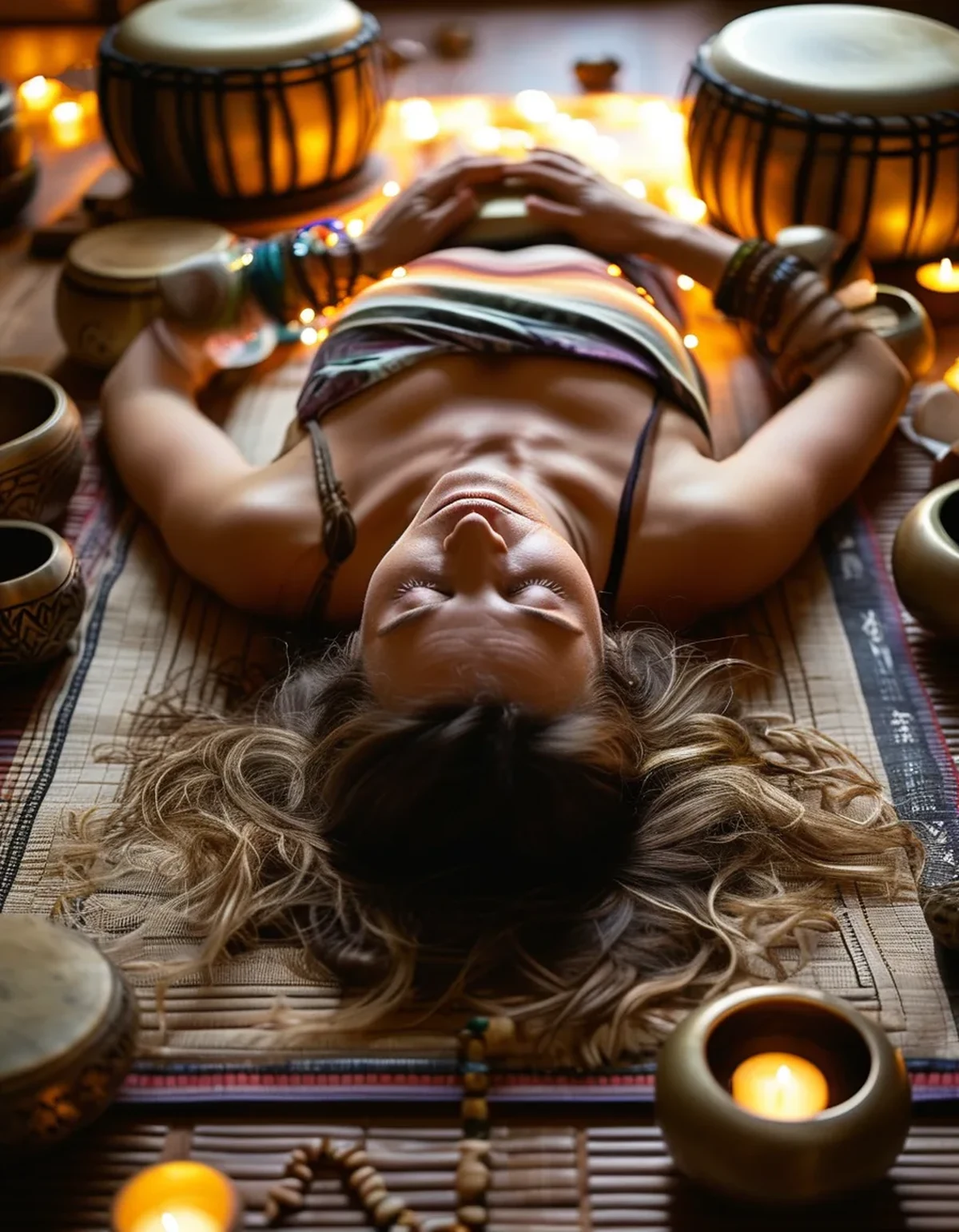
Walk into a sound bath for the first time and you’ll see a spread of instruments that looks more like a percussion collection than a wellness session. Here’s a breakdown of the main ones and what they’re each actually doing, so the next session feels less like undifferentiated ambient noise and more like a sequence of deliberate choices by the practitioner.
1. Crystal singing bowls
Made from quartz crystal, these bowls produce a clear, sustained tone when a mallet circles the rim, similar to running a wet finger around a wine glass but far more resonant. Different bowl sizes correspond to different pitches, and many practitioners tie specific bowls to different areas of focus during a session, often arranging a full set to correspond loosely with different areas of the body from feet to head.
The sustained, pure tone quality is often cited as one of the more immediately calming sounds in a session, since it lacks the sharp attack of a struck instrument. Larger bowls tend to produce a lower, more grounding pitch, while smaller bowls ring higher and brighter, which is why practitioners often layer several sizes together rather than relying on just one.
2. Metal (Tibetan-style) singing bowls
These produce a warmer, more textured tone than crystal bowls, often with more overtone complexity — meaning you hear multiple pitches blending within a single note. They can be struck or played around the rim like crystal bowls, and the metallic composition gives a noticeably different tonal quality that some people find grounding compared to the brighter crystal sound. Many of these bowls are handmade from a blend of metals, which is part of why no two produce an identical tone even at a similar size.
3. Gongs
Gongs are often the most physically felt instrument in the room — a large gong produces low-frequency waves that some participants describe feeling in their chest, not just hearing. The sound is less pure and more textured or chaotic than a bowl, building and swelling rather than holding one steady tone, which is why gongs are frequently used for a session’s more intense or climactic moments. A skilled practitioner will often build a gong’s intensity gradually across several minutes rather than striking it at full force immediately, giving your nervous system time to adjust to the more overwhelming sound.
4. Chimes and wind chimes
Chimes offer a sharper, brighter, higher-pitched sound compared to the sustained low tones of bowls and gongs. They’re often used at transition points in a session — the start, the end, or between segments — as a way to mark a shift in attention without the heaviness of a gong, functioning almost like a gentle bell marking the passage of one phase into the next.
5. Tuning forks
Tuning forks deliver a very precise, single-frequency tone, sometimes placed near or lightly on the body rather than just played in the air. This creates a more localized sensation than the room-filling sound of a bowl or gong, and some practitioners use them for targeted work on specific areas rather than the full-body immersive feel of the larger instruments. The vibration is often described as more of a felt buzz than a heard tone when placed directly against skin or clothing.

6. Ocean drums and rain sticks
These mimic natural sounds — waves, rainfall — using small beads or pellets moving inside the instrument. They’re generally used as a softer, textural backdrop layered under other instruments rather than a featured sound on their own, adding a subtle sense of natural ambience to a session, similar to how a white-noise machine functions during sleep but woven live into the room rather than played from a speaker.
7. Voice and toning
Some practitioners incorporate their own vocal toning — sustained, single-note humming or chanting — as a live instrument alongside the physical ones. The human voice’s frequency and its live, unamplified presence in the room create a different quality of connection than an instrument alone, which some participants find more personally resonant, since it’s the one sound in the room coming directly from another person rather than an object.
What Nobody Tells You About Sound Bath Instrument Choice
Practitioners usually don’t play instruments randomly — many follow a loose arc, opening with gentler, higher-pitched sounds like chimes to settle the room, building through bowls and gongs at the session’s peak, and closing back down with something soft like a chime or voice to signal the return to normal alertness. Knowing this arc exists can make an intense middle section feel less alarming and more like an expected, deliberate part of the structure rather than something going wrong.
Another detail newcomers rarely hear before their first session: it’s completely normal, and common, to fall asleep partway through, and most practitioners consider this a sign the practice is working rather than something to apologize for afterward. Bring a light layer even in warm weather, since lying still for 45-60 minutes tends to cool the body down more than people expect, and a chilly room can pull attention away from the instruments faster than almost anything else.
FAQ: Sound Bath Instruments Questions, Answered
Do all sound baths use every one of these instruments?
No — most practitioners use a subset based on their training and style, with bowls and gongs being the most consistently present across different sound bath traditions.
Which instrument is best for beginners who feel overwhelmed by intense sound?
Crystal or metal singing bowls tend to be gentler entry points than a large gong, which some first-timers find more physically intense than expected.
Is there research behind why these sounds feel calming?
Some research explores how certain frequencies and rhythmic sound patterns relate to relaxation responses, though the field is still developing — treat sound baths as a genuinely enjoyable relaxation practice rather than a clinically proven treatment. This is general information, not medical advice.
Can I ask a practitioner in advance which instruments they’ll be using?
Yes — most practitioners are happy to describe their typical setup beforehand, which is a reasonable question to ask if you know a specific instrument like a large gong tends to feel overwhelming for you personally, and most will happily seat you further from the gong or near an exit if that helps you relax into the session.
TL;DR:
- Crystal and metal bowls offer sustained, calming tones with different warmth and texture
- Gongs are the most physically felt instrument, often used for intense session moments
- Chimes and tuning forks provide sharper, more precise, targeted sound
- Ocean drums and voice toning add texture and personal connection to a session
- Most sessions follow a loose arc from gentle to intense and back to gentle, not a random sequence
Next time you’re in a sound bath, try picking out each instrument individually — it turns a passive experience into a genuinely engaging one, and understanding the arc of a typical session can make even the most intense gong moment feel like part of the plan rather than something to brace against. This is general information, not medical advice.
Keep Reading
This article is for general informational purposes only and is not medical advice. Always consult a qualified health professional for guidance specific to you.