7 Reasons a Home Sound Bath Never Feels Like the Studio
Quick Answer: A live sound bath delivers low frequencies through your body as physical vibration, in a room with long reverberation, with no possibility of interruption and no decisions to make. A recording on a phone speaker delivers none of that. The seven things that close most of the gap are proper headphones or a subwoofer, full darkness, real warmth, a committed 45-minute block, no phone in the room, a fixed time slot, and lying down properly supported.
The difference is not that the studio has magic. It is that the studio removes seven variables you are still carrying at home.
This blog has covered why frequency matters more than volume, why sound baths work better lying down than sitting up, and why some instruments affect you more than others. This is why the same instruments do less in your living room.
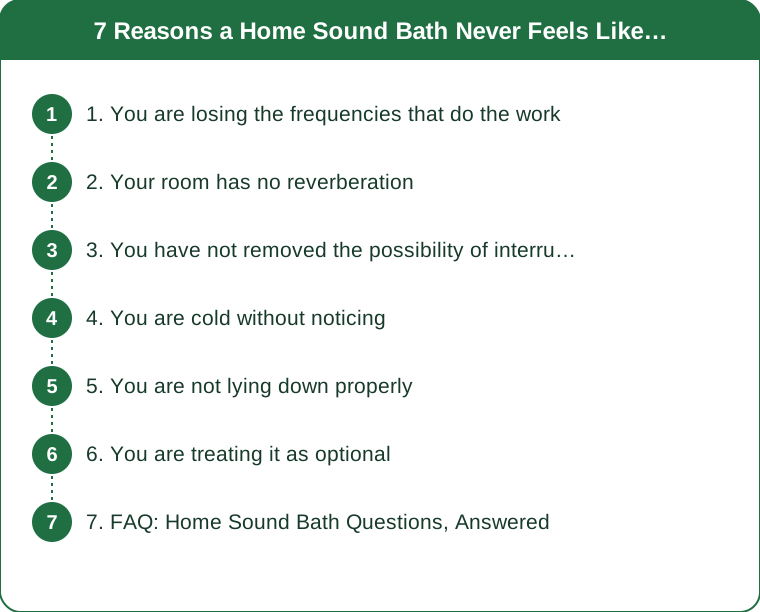
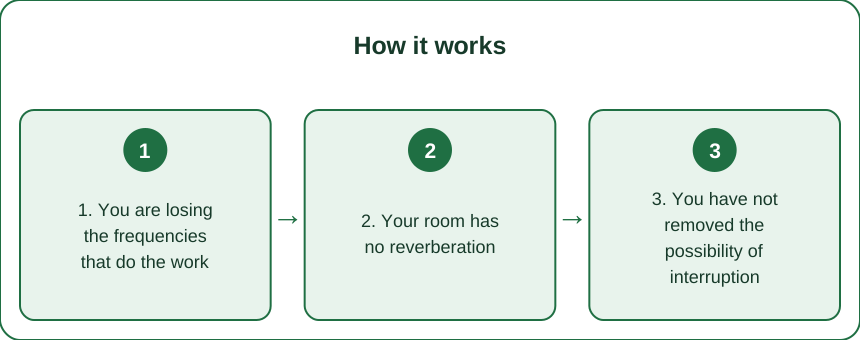
1. You are losing the frequencies that do the work
The lowest content is what you feel, and it is the first thing consumer playback discards.
Gongs and large bowls produce substantial energy below 100Hz, and some content well below that.
Phone and laptop speakers reproduce essentially nothing below about 200Hz. The entire physical layer is simply absent, and what remains is the thin upper harmonic content.
In a live room you feel those frequencies through the floor and through your ribcage, which is a tactile experience rather than only an auditory one.
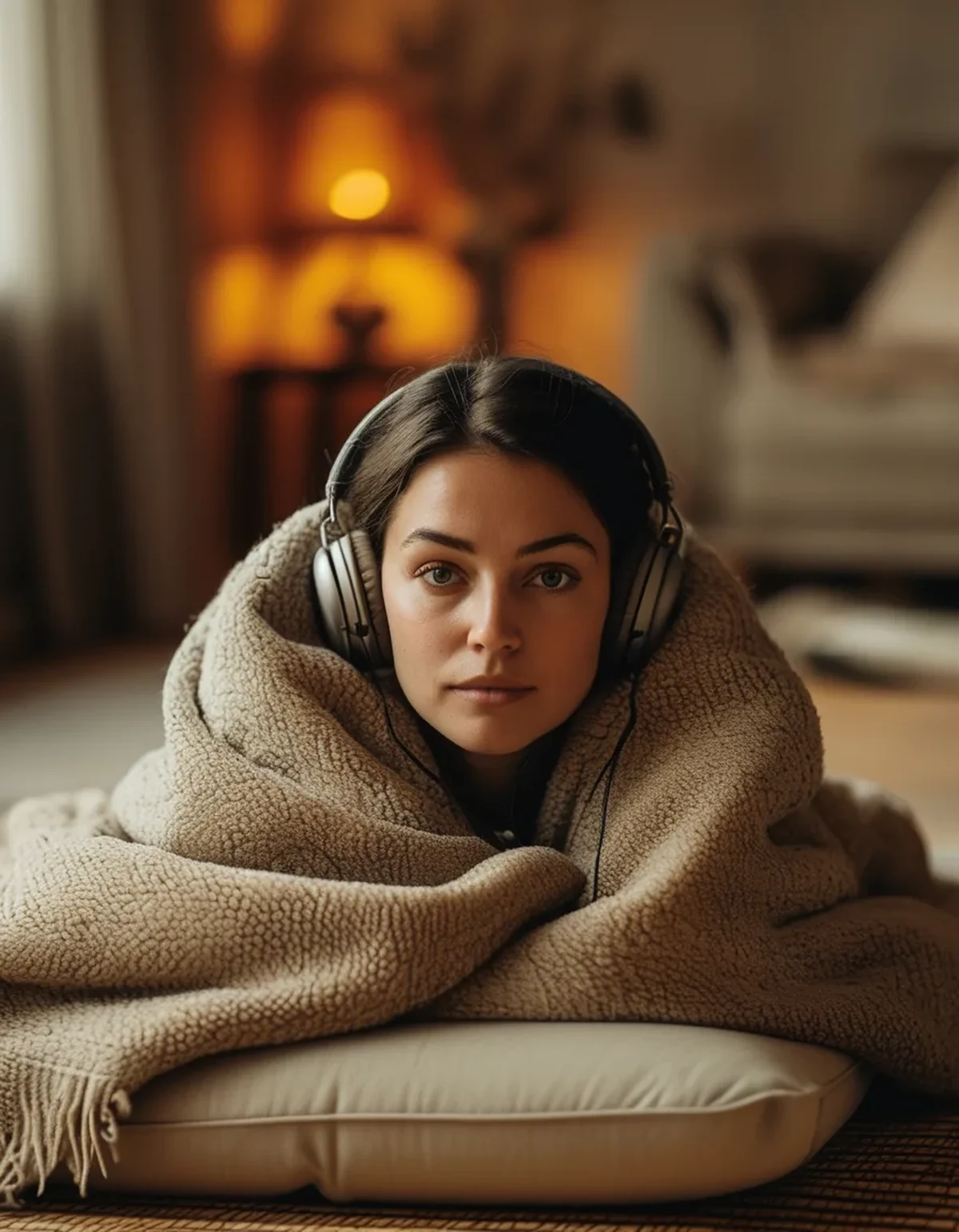
Over-ear headphones recover much of this, and are the single highest-value change for home practice. Closed-back models with genuine low-frequency extension matter more than expensive open-back ones.
A subwoofer or a decent speaker on the floor recovers the tactile element in a way headphones cannot, because you feel it through the surface you are lying on.
Earbuds are the weakest option and produce most of the disappointment people report with recordings.
2. Your room has no reverberation
The space is part of the instrument, and a carpeted living room is acoustically dead.
Studios and halls used for sound baths typically have long reverberation times, often deliberately chosen for it. That decay is what makes a gong feel like it is surrounding you.
A furnished domestic room absorbs quickly, so notes stop rather than bloom, and the overlapping wash that produces the trance-like quality never forms.
A good recording captures the room it was made in, which is exactly why a well-produced recording on headphones outperforms live playing in a small dead room.
Check whether your recording was made in a real space or close-mic’d dry. Dry recordings sound clinical and do very little.
Hard-surfaced rooms at home help — a bathroom, a tiled hall, a room with bare floors — and are worth trying if the option exists.
Do not add artificial reverb. It is generally obvious and it flattens the natural decay characteristics that matter.
3. You have not removed the possibility of interruption
The studio’s biggest advantage is that nothing can happen for the next hour.
Part of what allows deep relaxation is the certainty that no demand will arrive. At home, that certainty does not exist unless you construct it.
A phone in the room, even face down and silent, maintains a low level of vigilance because the possibility of interruption is still live.
Put the phone in another room entirely. If it is your playback device, put it in aeroplane mode first, every time.
Tell anyone else in the house the time window and close the door. A door that could open is a door your nervous system is tracking.
Deal with the doorbell. For many people this is the single largest source of residual alertness.
And having nothing after it matters. A session with an appointment 40 minutes later never goes deep, because part of your attention is timekeeping.
4. You are cold without noticing
Body temperature drops in deep rest, and cold prevents the state you are aiming for.
Core temperature falls as the parasympathetic system takes over, so a room that felt comfortable when you lay down is genuinely too cold twenty minutes in.
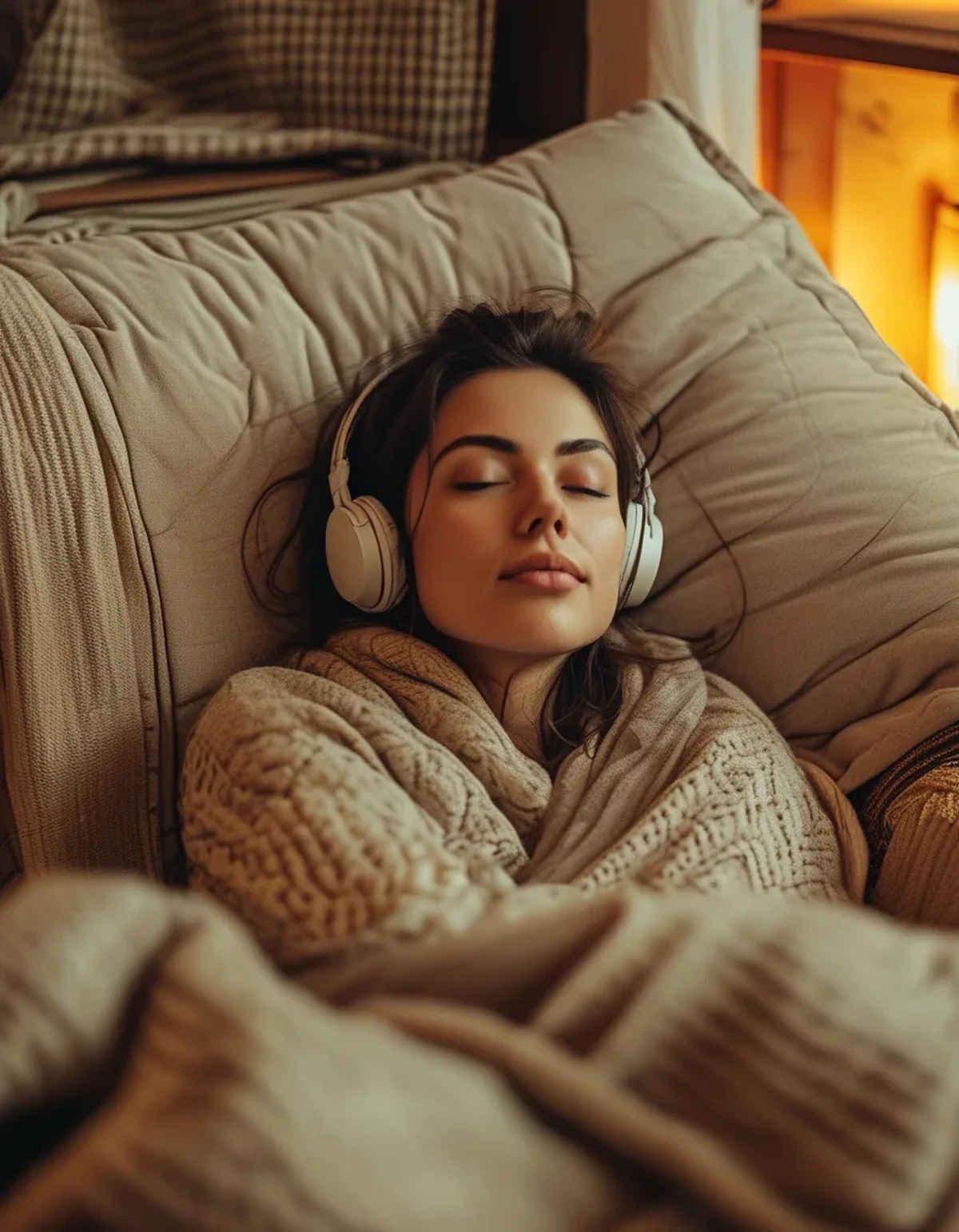
Studios cover people with blankets for exactly this reason, and it is the most commonly skipped step at home.
Cold produces micro-tension you will not consciously notice but which prevents full release.
Cover yourself even in summer, and put socks on. Feet cool first and fastest.
Warm the room a couple of degrees above what feels comfortable standing up.
And use an eye covering. It adds warmth and darkness together, and both matter.
5. You are not lying down properly
Position determines how much of your body can actually let go.
Lying down removes postural muscle work entirely, which sitting does not, and that release is a substantial part of the effect.
A yoga mat on a hard floor is not comfortable enough for 45 minutes. Discomfort at minute 30 ends the session regardless of the audio.
Support the knees. A bolster or cushion under the knees removes lower back tension and is the single most effective comfort adjustment.
Support the head slightly, but not so much that the throat is compressed.
A bed works if you do not fall asleep on it. If you do, use the floor with proper padding.
And arms slightly away from the body, palms up — a small thing, but it prevents the shoulder tension that builds when arms are pinned.
6. You are treating it as optional
The commitment is doing more work than people credit.
Paying and travelling creates commitment, and commitment reduces the internal negotiation that fragments home sessions.
A booked class has a start time you do not choose in the moment, which is exactly why it happens and the home version frequently does not.
Give it a fixed slot in the week — a specific day and time, in the calendar, as a commitment.
Commit to the full length. A 45-minute session cut short at 20 minutes is not a shorter version of the same thing; the deep phase generally begins somewhere between 15 and 25 minutes.
Do not multitask it. Sound baths as background audio while doing something else are a different and much weaker product.
And expect the first three home sessions to be worse than a studio session. The environment has to become a cue, and that takes repetition.
7. FAQ: Home Sound Bath Questions, Answered
Do sound bath recordings actually work?
They can, but the delivery matters enormously. On a phone speaker you lose everything below about 200Hz, which is the entire physical layer of the experience. On decent over-ear headphones, a well-recorded session in a real acoustic space gets much closer to live.
Should I use headphones or speakers for a sound bath at home?
Headphones for frequency range and isolation; a speaker or subwoofer on the floor for tactile vibration. If you have to pick one, closed-back over-ear headphones are the more reliable choice. Earbuds are the weakest option by a clear margin.
How long should a home sound bath be?
At least 45 minutes, and commit to the full length. The deeper phase typically begins somewhere between 15 and 25 minutes in, so short sessions consistently stop just before the part that people are actually seeking.
TL;DR:
- Phone speakers discard everything below about 200Hz, which is the entire part of a sound bath you feel rather than hear.
- Your room is acoustically dead compared to a studio. A well-recorded session on over-ear headphones recovers most of that.
- Cold and interruptibility are the two silent killers. Blanket, socks, closed door, phone in another room.
- Commit to a fixed slot and the full 45 minutes. The deep phase starts around minute 15 to 25, which is where most home sessions stop.
Fix the headphones and the blanket first. Those two account for most of the gap.
Keep Reading
This article is for general informational purposes only and is not medical advice. Always consult a qualified health professional for guidance specific to you.